
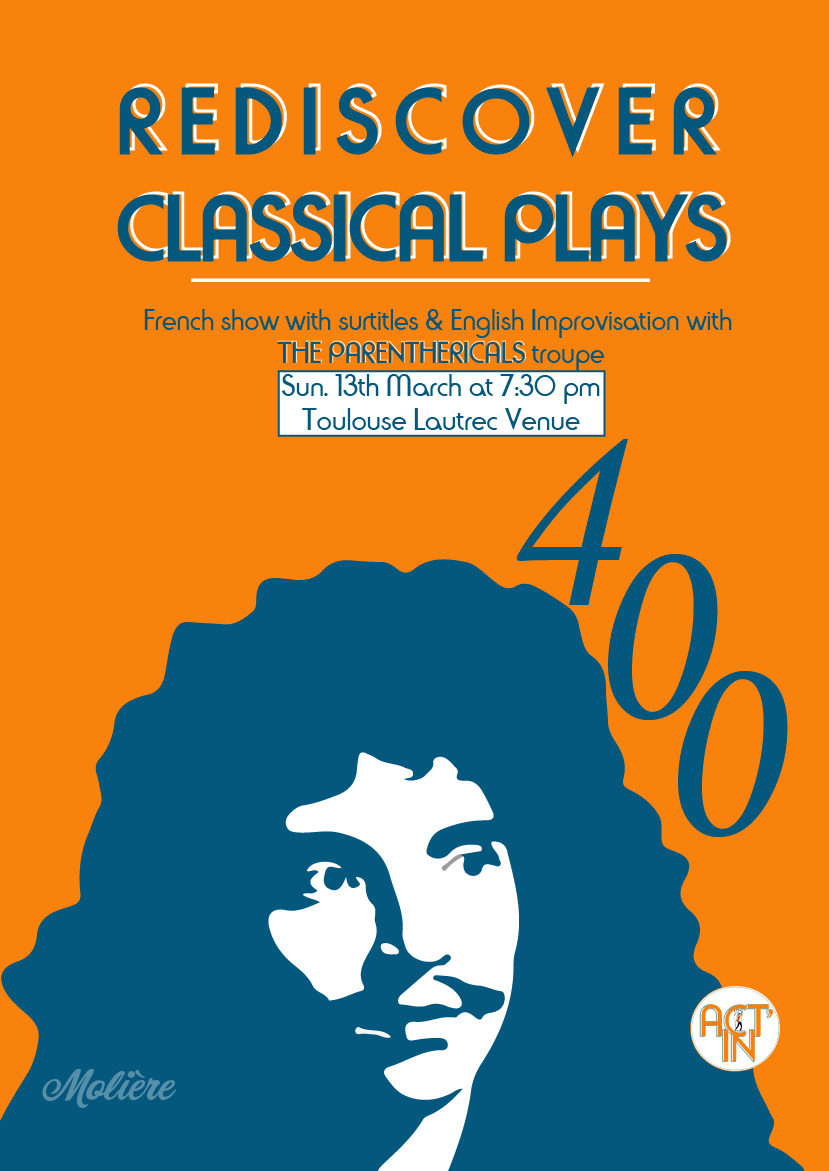
Performed on 13 March 2022, Rediscover the Classics offered an original adaptation of two of Molière’s iconic works: “Tartuffe” and “The Miser”. In the first half, Tartuffe has moved into Orgon’s house and takes full advantage of the blind trust Orgon places in him. Beneath the appearance of a respectable and devout man, the impostor steals, lies and skilfully manipulates those around him. Even when Damis attempts to reveal his true nature, Tartuffe manages to portray himself as the victim and strengthens his hold over Orgon even further. Blinded by his admiration, Orgon decides to make Tartuffe his sole heir and intends to marry him to his daughter Mariane. However, Mariane has absolutely no desire to follow this plan. Supported by Dorine, she must find the courage to stand up to her father and reject Tartuffe. When he attempts to approach her under the guise of religious devotion, Mariane ultimately succeeds in making him abandon the idea of this marriage. The performance then takes us into the world of The Miser. Cléante confides in his sister Élise that he is in love with Mariane. But their father Harpagon, completely obsessed with his money and convinced that everyone around him is trying to steal from him, has also decided to marry her himself. While La Flèche suffers Harpagon’s suspicions and humiliating searches, Élise and Cléante discover the marriages their father has arranged without asking for their opinion. Harpagon wishes to marry Mariane, who is promised at the same time to Cléante, and intends for his daughter Élise to marry the wealthy Seigneur Anselme, despite the fact that she loves someone else. By bringing these two works together, the performance united two unforgettable characters from Molière: Tartuffe, driven by hypocrisy and manipulation, and Harpagon, trapped by his greed. Around them, the children and servants attempt to resist authority, defend their feelings and take control of their own destinies. A fast-paced comedy about appearances, money, family power and forced marriages, demonstrating that the characters and flaws denounced by Molière remain, several centuries later, remarkably relevant. Adapted and directed by Candice Desmet.
